Cargo Transportation via Huu Nghi Border Gate
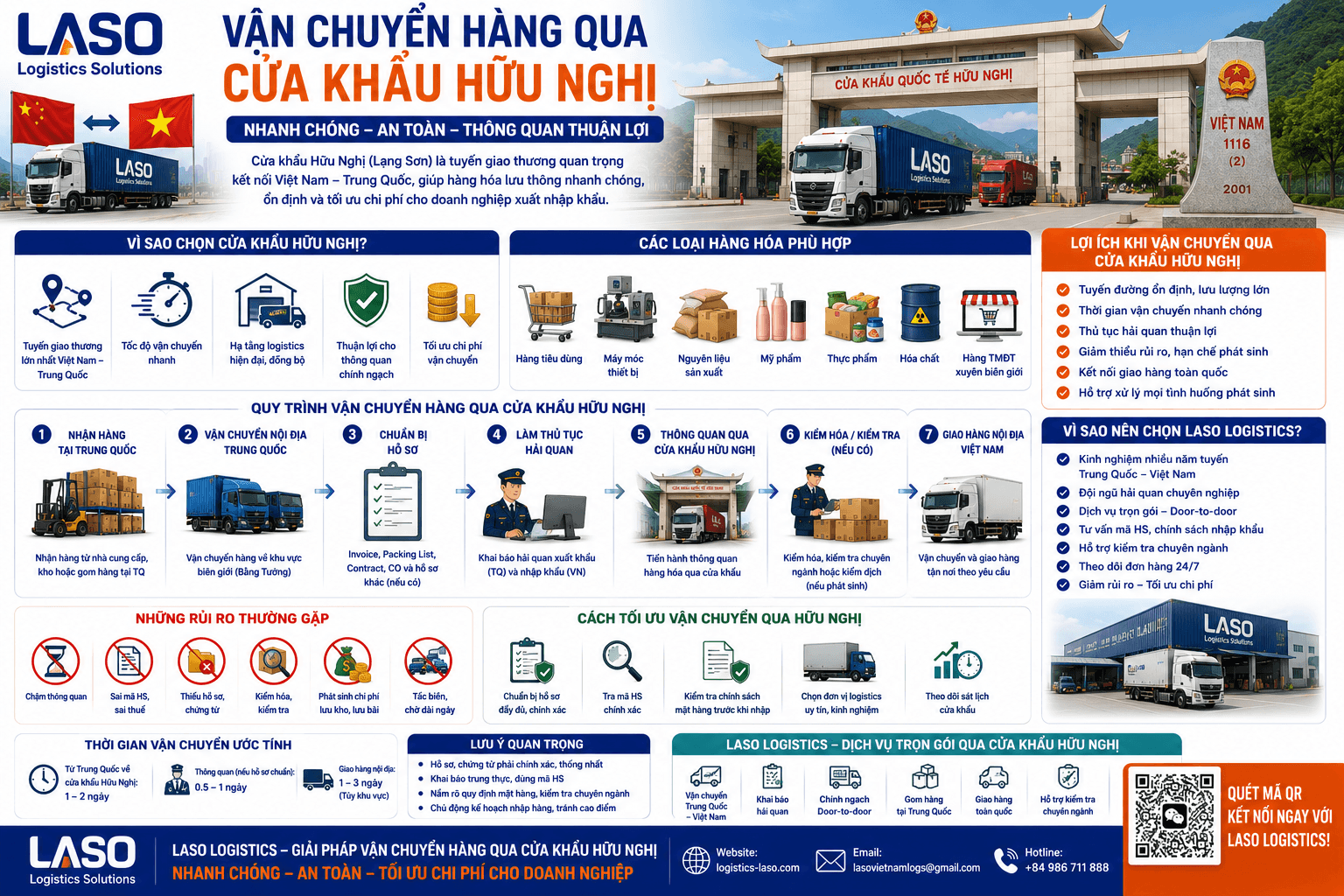
In the import-export landscape between China and Vietnam, the Huu Nghi (Lang Son) border gate serves as one of the most critical and bustling transportation routes. It is regarded as the “logistics artery” connecting goods between the two nations, particularly for enterprises importing goods from China to Vietnam.
Many enterprises choose to transport goods via Huu Nghi due to:
- Rapid speed
- Stable routes
- Favorable conditions for official-channel imports
- Direct connection to China
- Suitability for various types of cargo
However, without a clear understanding of the process, businesses may still encounter:
- Customs clearance delays
- Incurred costs
- Border congestion
- Physical inspections
- Missing documentation
- Delayed delivery
So, what should you keep in mind when shipping goods through the Huu Nghi border gate?
**What is the Huu Nghi Border Gate?**
Huu Nghi Border Gate is located in Lang Son and is one of the largest international road border gates between Vietnam and China.
It serves as a direct connection point with areas such as:
- Pingxiang (China)
- Guangxi
- Nanning
- Inland China logistics centers
Thanks to its strategic location, this is a vital route for bilateral trade.
**Why do businesses choose the Huu Nghi border gate?**
1. The Largest Trade Route between Vietnam – China
Massive cargo volumes flow through daily.
Suitable for:
- Official imports
- Commercial goods
- Industrial goods
- Machinery
- Production raw materials
- Consumer goods
2. Rapid Transit Speed
Compared to many other routes, especially for goods traveling to:
- Guangxi
- Nanning
- Guangzhou (via transshipment)
3. Robust Logistics Infrastructure
The Lang Son area features:
- Warehousing
- Transshipment hubs
- Customs services
- Logistics services
- Container trucks
- Import-export support systems
4. Facilitation for Official Customs Clearance
This is the most significant advantage.
**Types of Goods Suitable for Transport via Huu Nghi**
The range is highly diverse. For example:
- Consumer goods: Household items, accessories, retail goods
- Machinery: Industrial equipment, production machines, electrical devices
- Raw materials: Components, packaging, industrial materials
- Cosmetics: Provided documentation is compliant
- Food: If import policies are met
- Chemicals: Depending on the category
- E-commerce goods: Cross-border logistics
**Transportation Process via Huu Nghi Border Gate**
Step 1: Receiving goods in China
Goods can be picked up from factories, supplier warehouses, or consolidation hubs in cities like Guangzhou, Shenzhen, Dongguan, Nanning, and Pingxiang.
Step 2: Inland China transportation
Moving goods to the border area.
Step 3: Document preparation
Typically includes: Invoice, Packing List, Contract, CO (if applicable), and specialized permits (if required).
Step 4: Customs procedures
Including export customs and import customs.
Step 5: Clearance through Huu Nghi
Upon meeting all documentary requirements.
Step 6: Inspection/Examination (if applicable)
May occur for red-channel declarations, specific goods, or unclear documentation.
Step 7: Domestic delivery in Vietnam
To locations such as Hanoi, Bac Ninh, Hai Phong, Hung Yen, Hai Duong, and Ho Chi Minh City.
**How long does transit via Huu Nghi take?**
It depends on: cargo type, documentation, inland China routes, border conditions, and whether inspections occur. Generally, this route is quite fast if documents are standard.
**Factors Affecting Lead Time:**
- Border congestion: Often during peak seasons, holidays, or periods of enhanced control.
- Inspection: If the declaration falls into the red channel.
- Missing documents: Can easily cause delays.
- Specialized inspections: For items like cosmetics, food, electrical equipment, chemicals, or quarantine requirements.
**Common Risks:**
- Delayed clearance: Due to document errors.
- Incorrect HS Codes: Leading to tax discrepancies, inspections, and required explanations.
- Incurred costs: Storage, demurrage, handling, or vehicle coordination.
- Detained cargo: If policies are not met.
- Delayed domestic delivery: If coordination is suboptimal.
**How to Optimize Transport via Huu Nghi:**
- Prepare documents correctly from the start. This is extremely important.
- Determine accurate HS Codes to reduce risk.
- Check commodity policies before importing.
- Choose a logistics provider with experience in Lang Son to handle issues quickly.
- Closely monitor border schedules, especially during peak seasons.
**Why use professional logistics services?**
The Huu Nghi route offers good speed but requires practical handling experience. Professional logistics providers help:
✅ Provide route consultation
✅ Consolidate cargo
✅ Handle customs declarations
✅ Manage inspections
✅ Verify import policies
✅ Reduce incurred costs
✅ Provide door-to-door delivery
**LASO Logistics: Shipping Goods via Huu Nghi Border Gate**
LASO Logistics supports businesses with:
✅ China – Vietnam transport via Huu Nghi
✅ Official-channel imports
✅ Door-to-door service
✅ Customs declaration
✅ HS Code consultation
✅ Specialized inspection support
✅ Nationwide delivery
**Contact LASO Logistics**
Website: logistics-laso.com
Email: lasovietnamlogs@gmail.com
Hotline: +84 986 711 888
Laso Logistics – Fast, safe, and optimized shipping solutions via Huu Nghi border gate for your business.